






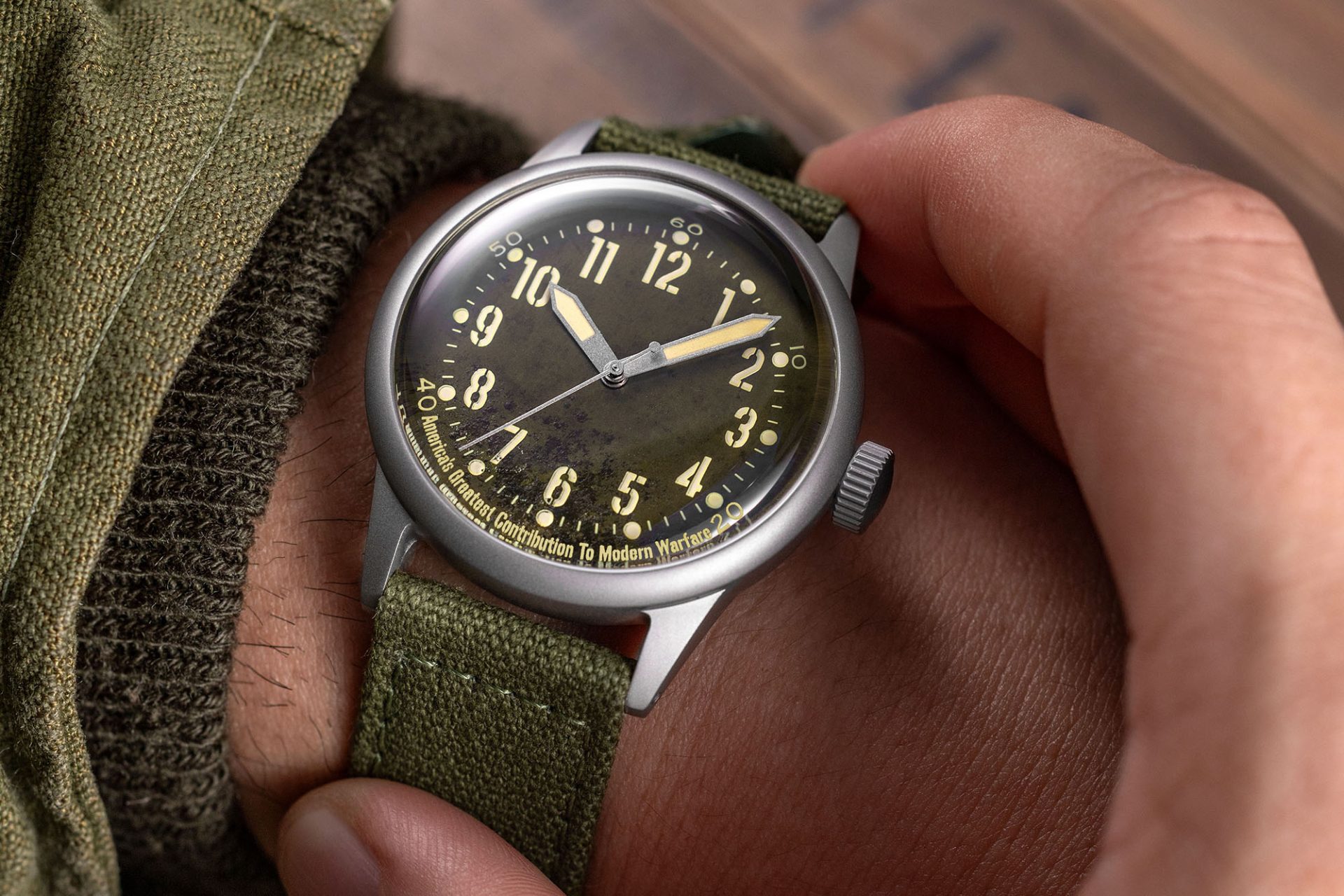
In the enthusiast community, the term “military-inspired” is often thrown around with reckless abandon. Most of the time, it merely equates to a matte black dial, a canvas strap, and a heavy-handed application of faux-patina lume. Praesidus, however, has consistently carved out a niche by anchoring its field watches in tangible, authentic heritage.
To commemorate the 82nd anniversary of D-Day on June 6th, 2026, the brand has taken this ethos to its logical, fascinating extreme.
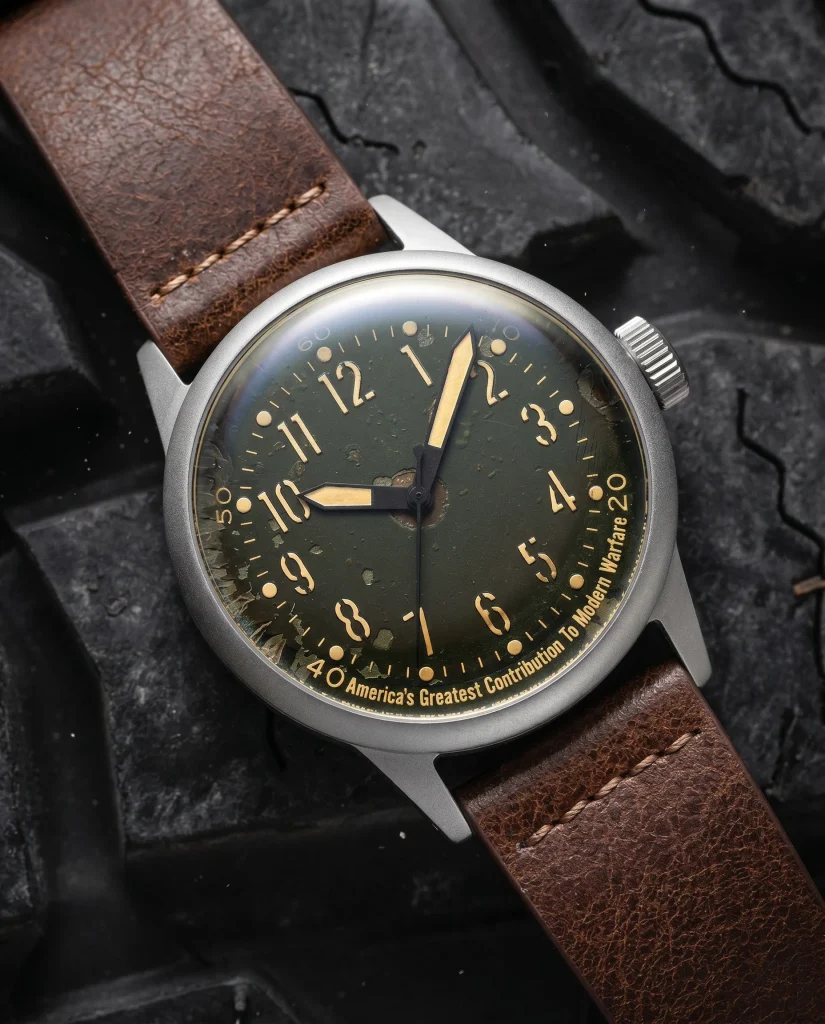
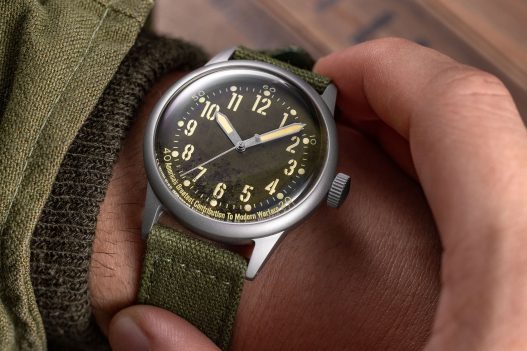
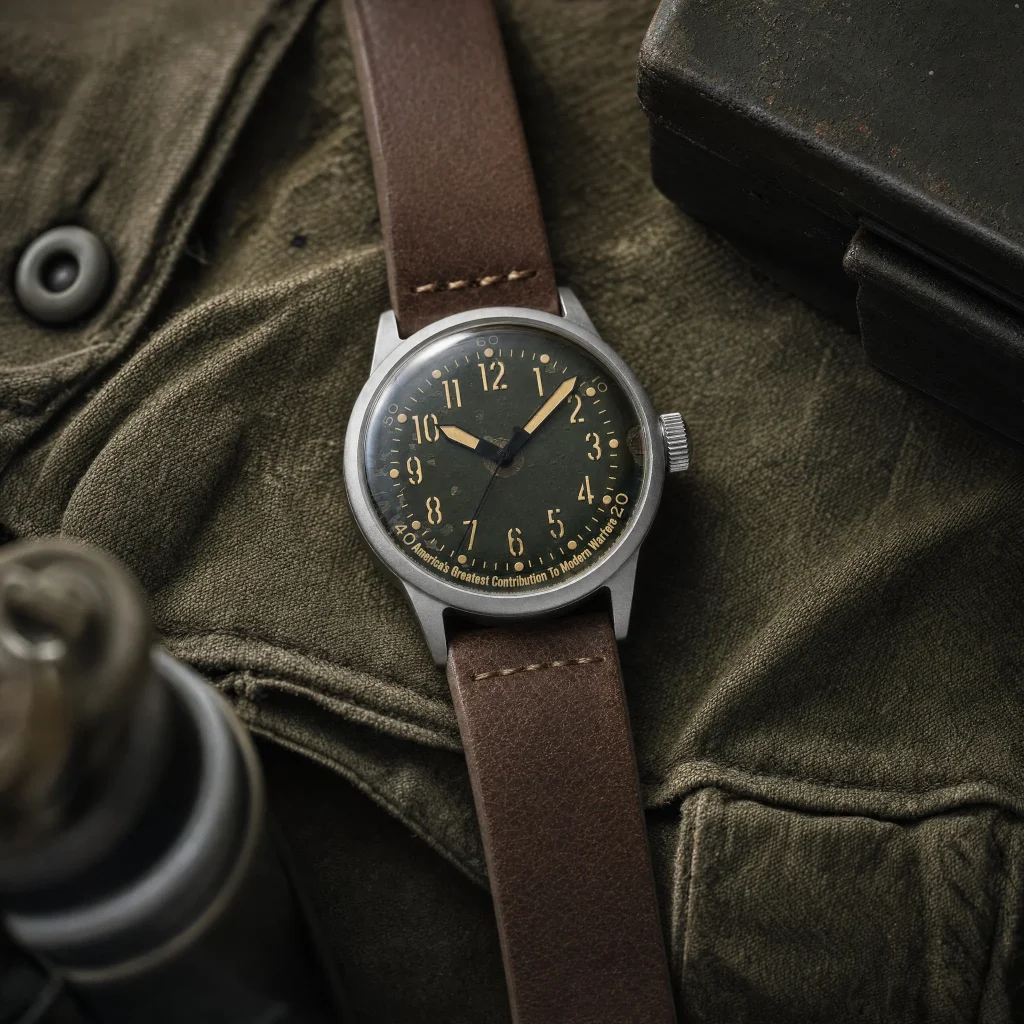
The Praesidus A-11 LMUV isn’t just a stylistic nod to World War II; it is quite literally forged from it. Priced at a highly competitive £540, this unique release features a dial cut directly from the hood of an authentic, combat-serving Willys MB utility vehicle.
Salvaged from the Vanguard of Liberty
The Willys MB is arguably the most iconic military vehicle ever produced. As the U.S. Army’s standard Light Utility Vehicle (hence the “LMUV” moniker), it served as the rugged, mechanical backbone of the Allied war effort across every major theater.
On June 6th, 1944, these relentless machines braved the surf of Normandy alongside the infantry, quickly becoming indispensable for front-line reconnaissance, logistics, and troop transport operations deep into occupied Europe.
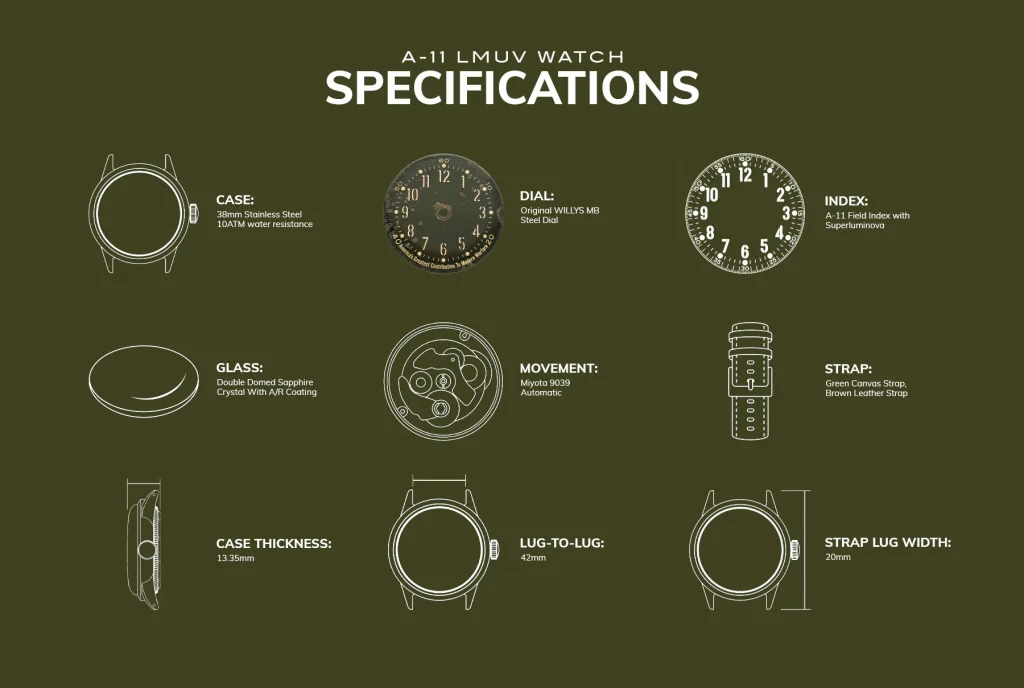
* Case Size: 38mm
* Case Material: 316L Stainless Steel
* Crystal: Domed Sapphire
* Movement: Miyota 9039 Automatic
* Water Resistance: 10 ATM (100 Meters)
* Price: £540
To capture that exact historical gravity, Praesidus recovered a section of an original Willys MB hood.
Rather than melting the metal down or applying a uniform coat of modern paint, the brand chose to preserve the decades of exposure, letting the metal tell its own story.
A Blasted Canvas with No Two Alike
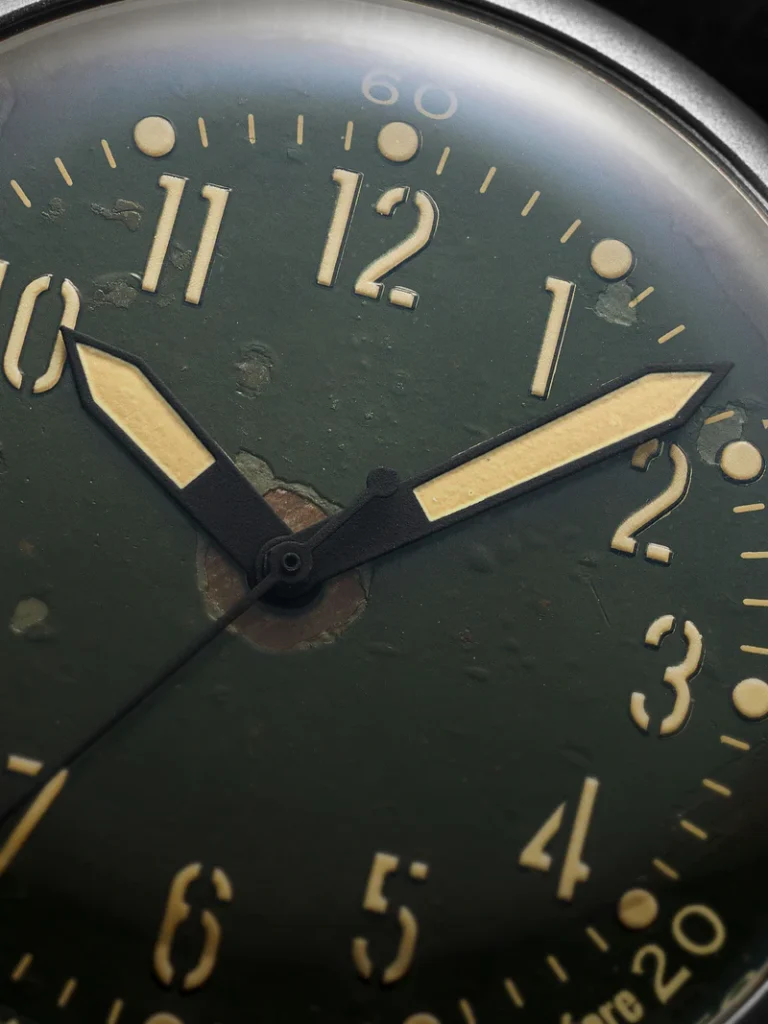
The true magic of the A-11 LMUV lies in how these salvaged dials are processed. Rather than relying on artificial aging or printed textures, the artisans utilized a carefully controlled blasting process.
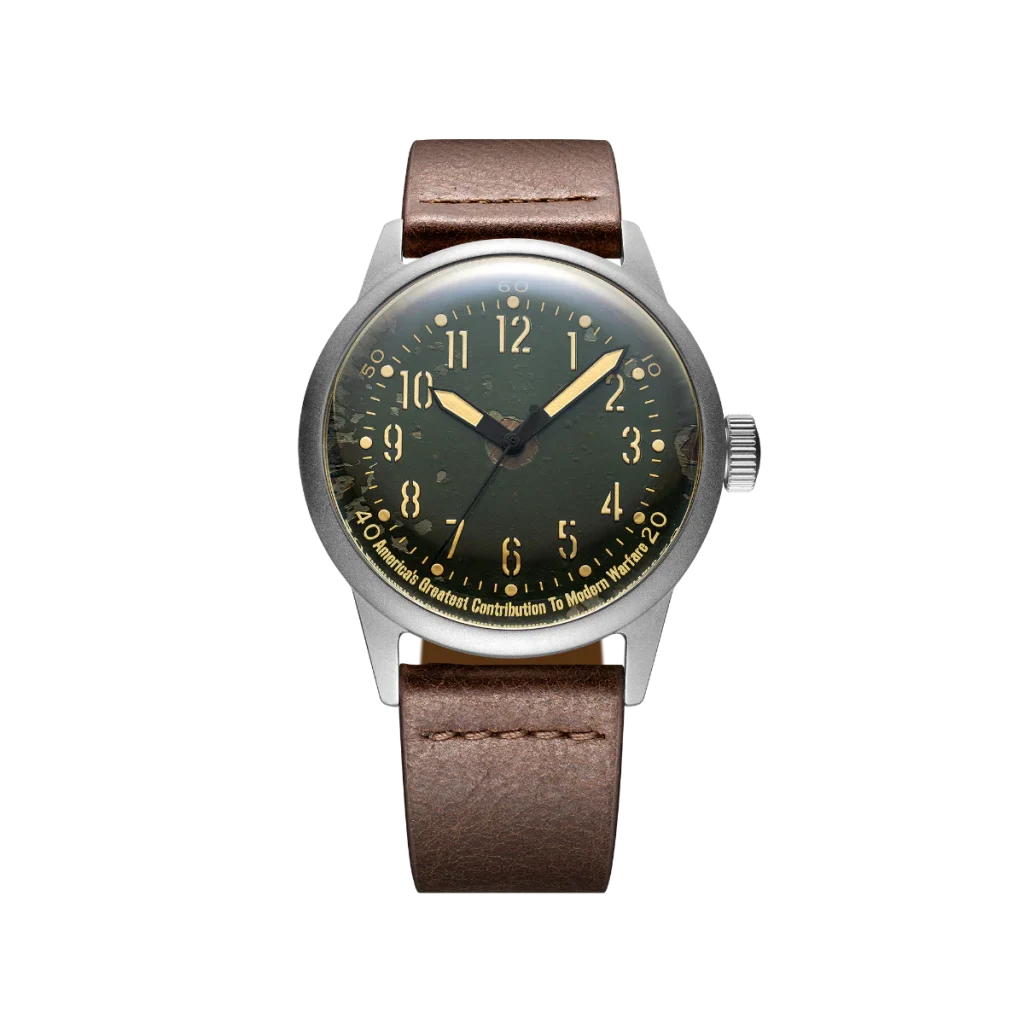
By gradually removing layers of time-worn paint and primer, they selectively exposed the history embedded within the steel.
“Because every section of the vehicle’s hood aged differently over decades of post-war life and service, each dial offers its own entirely unique combination of textures, scratches, raw steel, and weathering. There is no artificial manipulation here—just pure, unadulterated history on the wrist.”
Available across five distinct dial variations, every single watch represents a completely different stage in the life of the very same historic vehicle. Some dials display deep patches of original olive drab paint, while others reveal raw, oxidized steel and weathered corrosion patterns.
This guarantees that no two pieces in the collection are identical, providing a level of bespoke horological character typically reserved for high-end independent watchmakers.
A Modern Field Watch Built to Last
While the dial is unapologetically artifact-driven, the rest of the timepiece is engineered to withstand the rigors of modern daily wear.
Praesidus housed this historic metal inside a beautifully proportioned 38mm stainless steel case that directly channels the spirit of the original military-issued A-11 field watches.
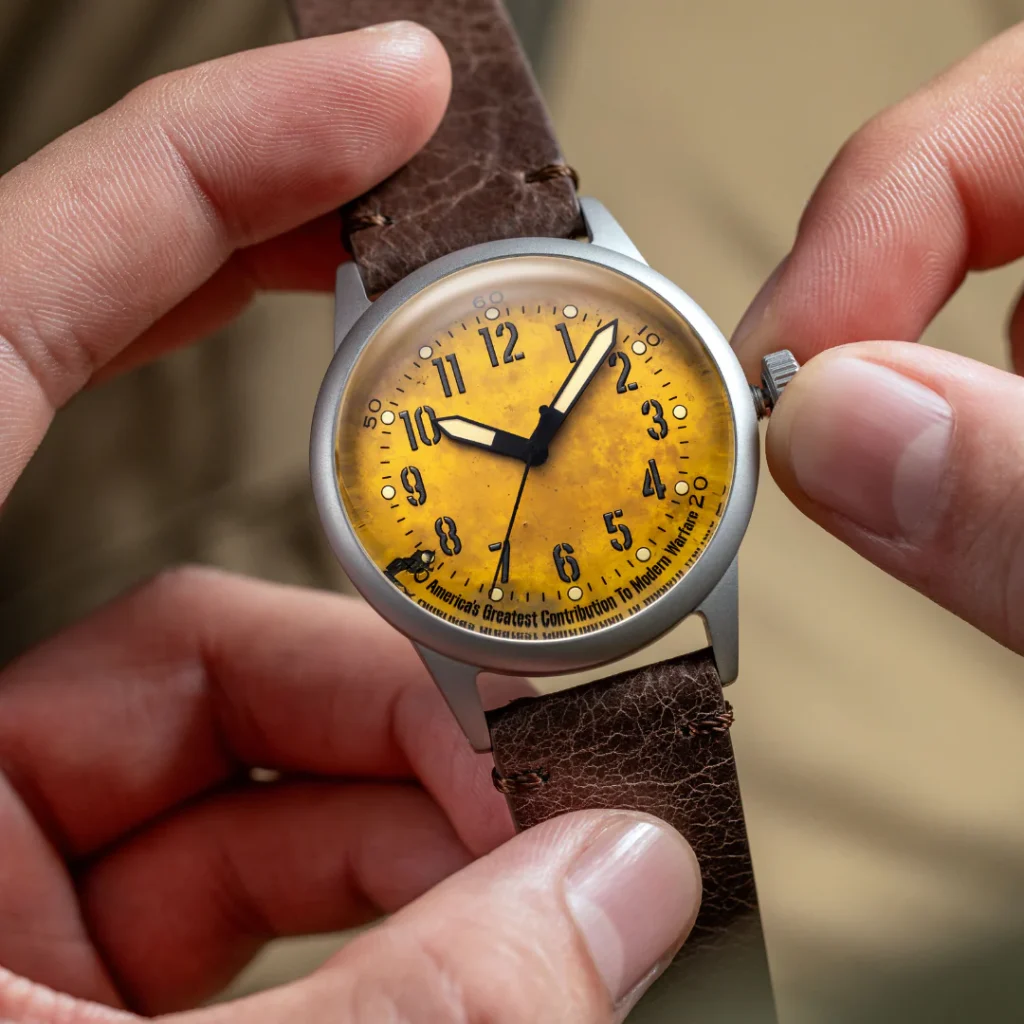
The case architecture strikes a flawless balance between utilitarian brushed finishes and crisp ergonomics.
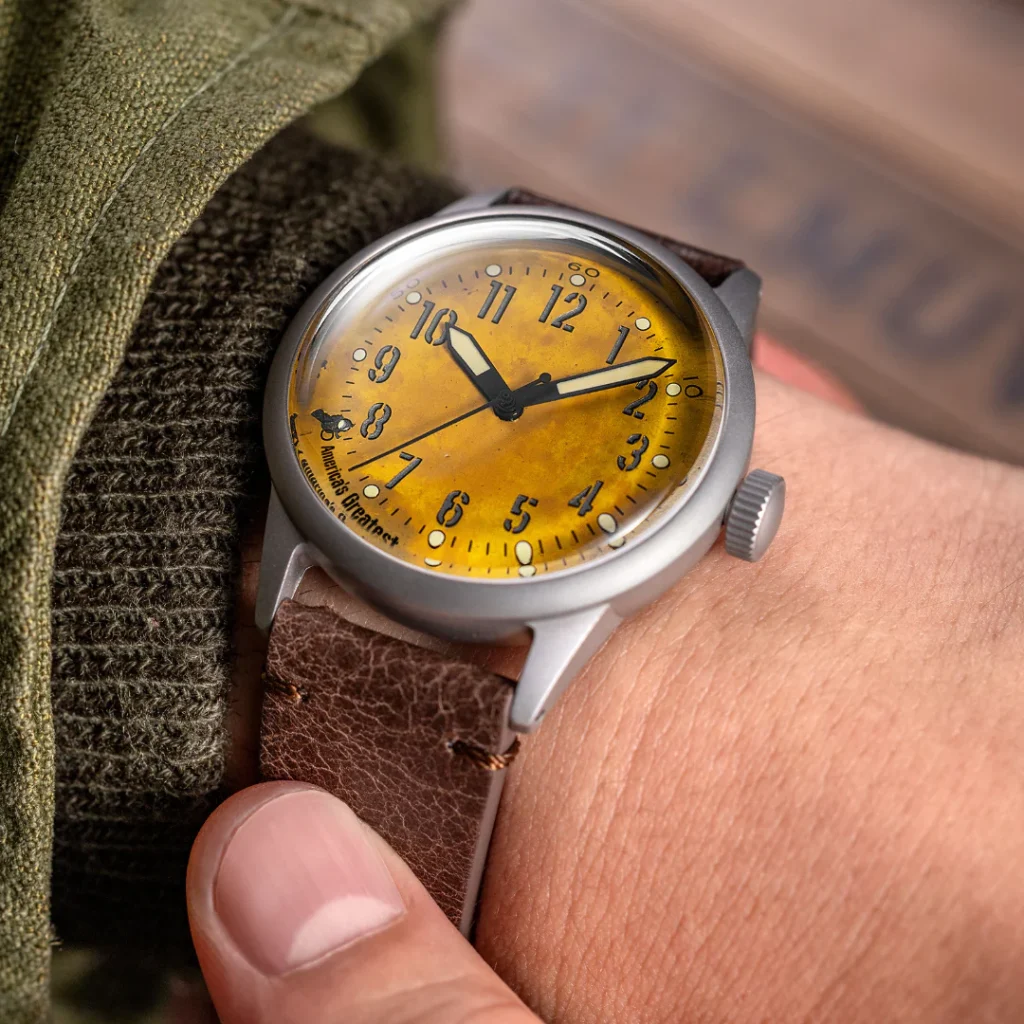
Protection is handled by a scratch-resistant sapphire crystal, and the watch boasts a robust 10 ATM (100 meters) of water resistance, making it a true go-anywhere daily driver.
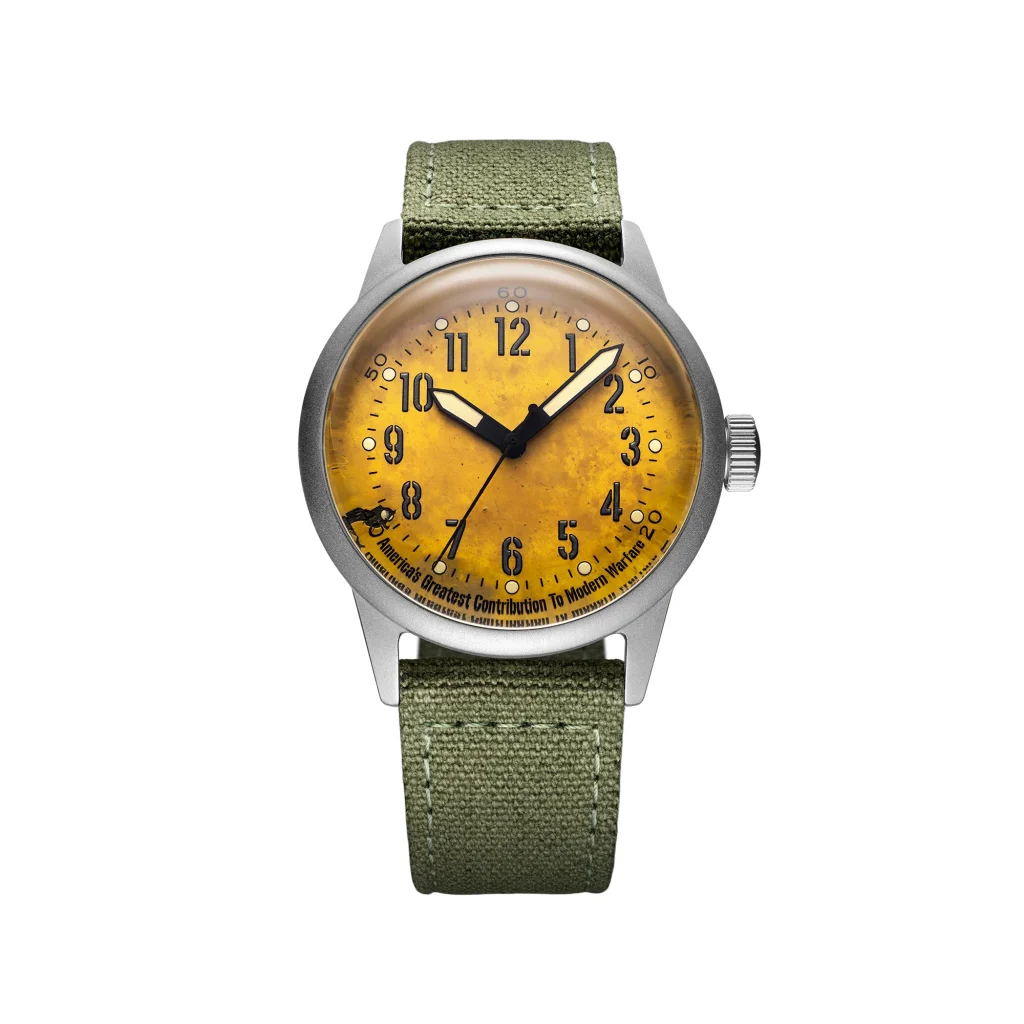
Powering the watch is the reliable Miyota 9039 automatic movement. This premium, Japanese-made no-date caliber operates at a smooth frequency of 28,800 vibrations per hour (4Hz), ensuring modern mechanical dependability that will last for generations.
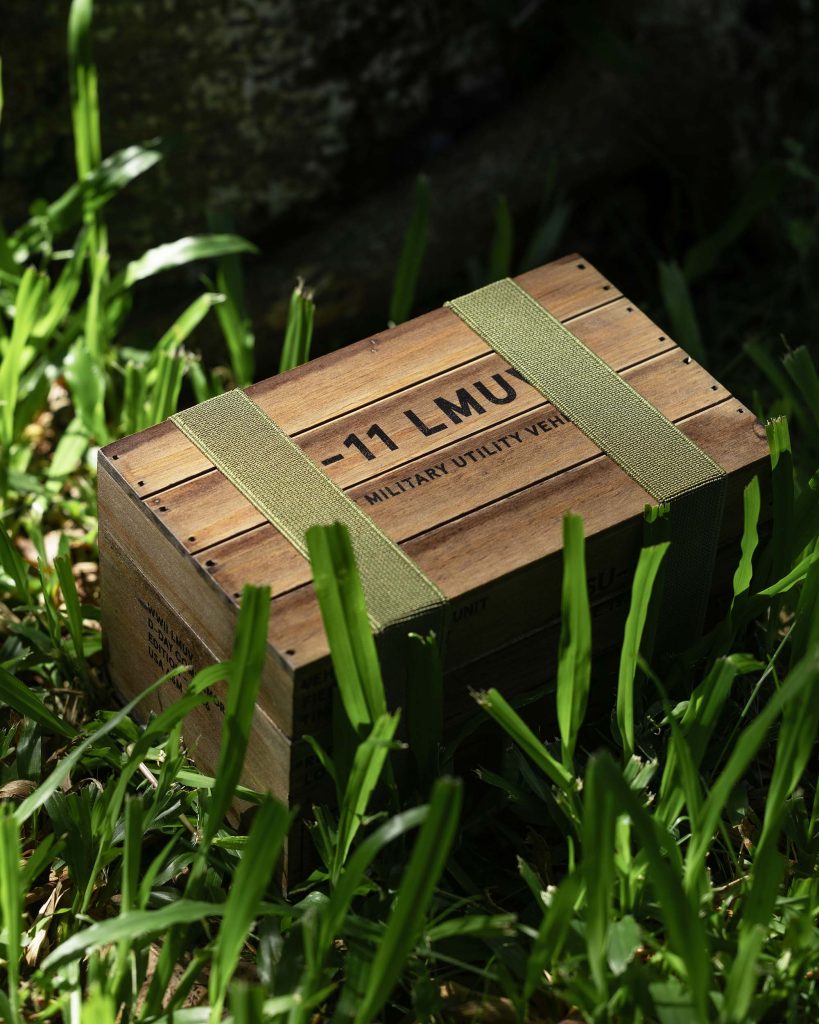
For £540, the Praesidus A-11 LMUV offers collectors a rare proposition: an affordable, beautifully executed tool watch that lets you wear a literal piece of the Greatest Generation’s history.