







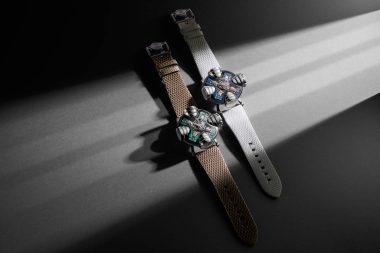
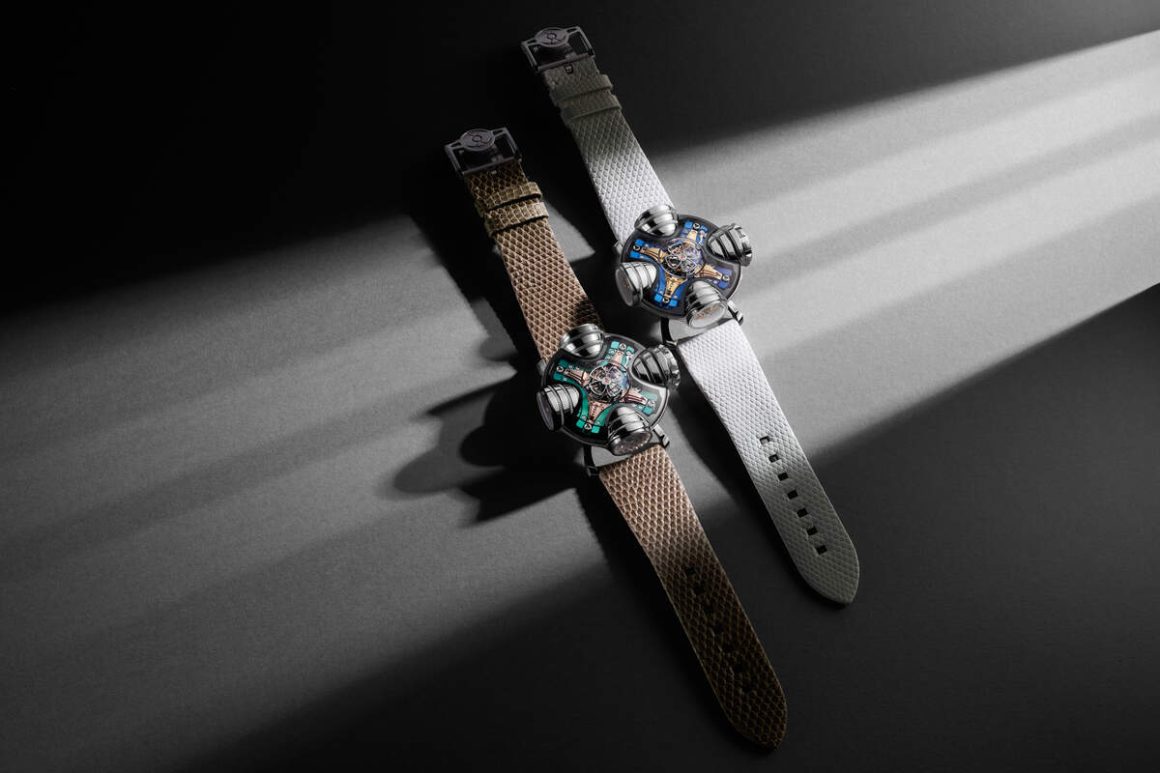
In the lexicon of 20th-century design, Le Corbusier famously declared that “a house is a machine to live in.” It was a cold, functionalist mantra that sought to strip architecture down to its mechanical essentials. Decades later, Maximilian Büsser and his creative collective at MB&F have inverted that logic to breathtaking effect.
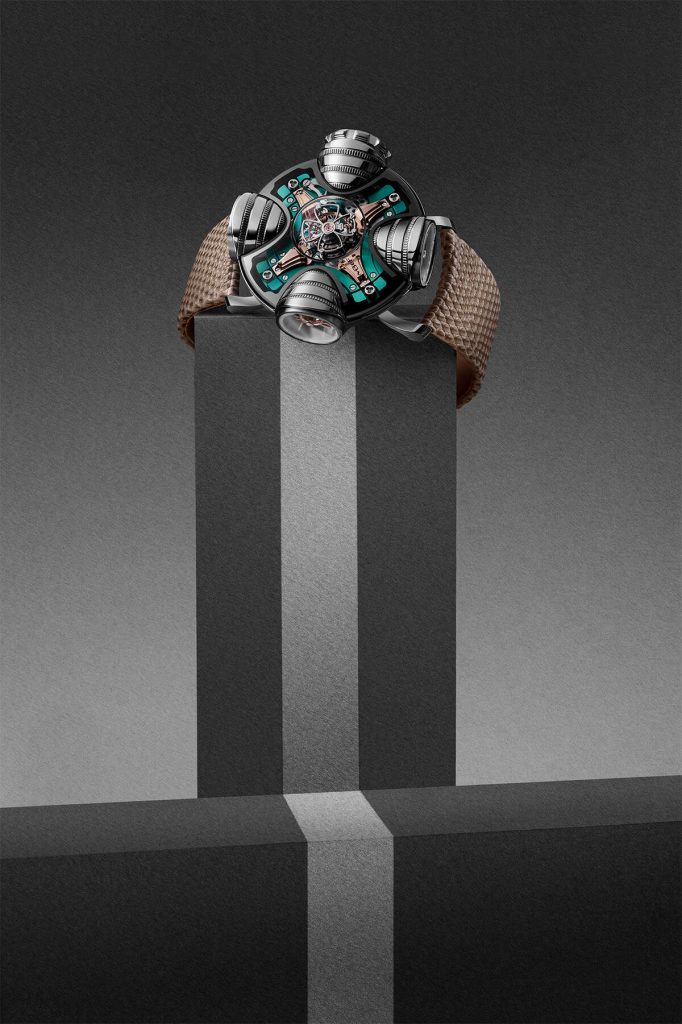
With the MB&F Horological Machine N°11, the watch is no longer a mere instrument for tracking seconds; it is a habitable space—a miniature, three-dimensional manor for the wrist that challenges the very boundaries of horological engineering. To own this piece of wearable architecture, which commands a price of CHF 198,000, is to reside, if only for a moment, in a world where time is a spatial experience.
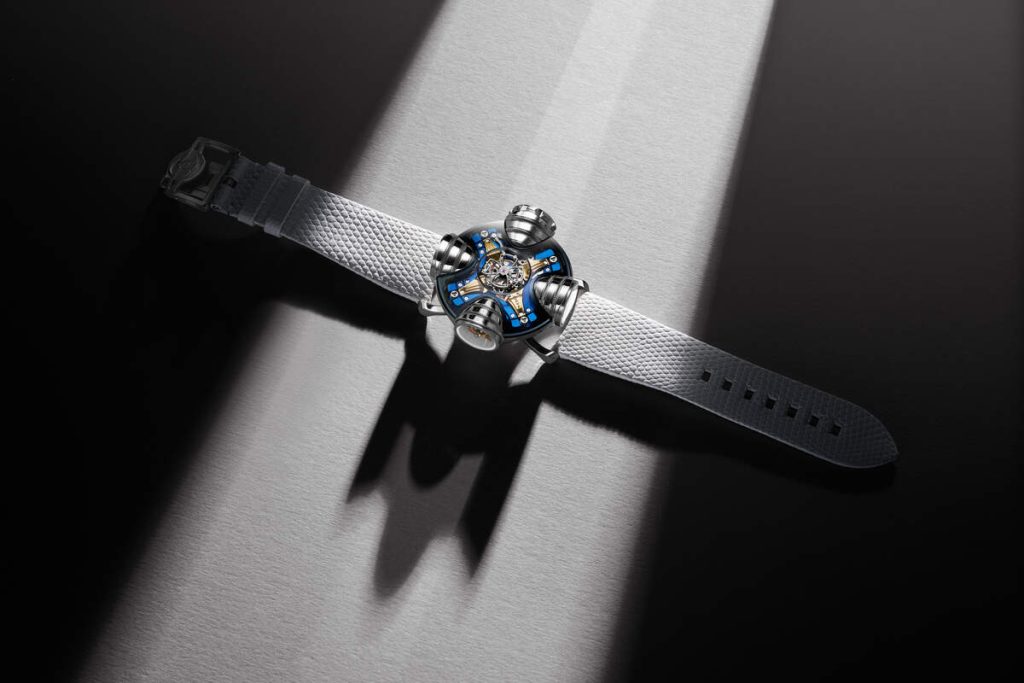
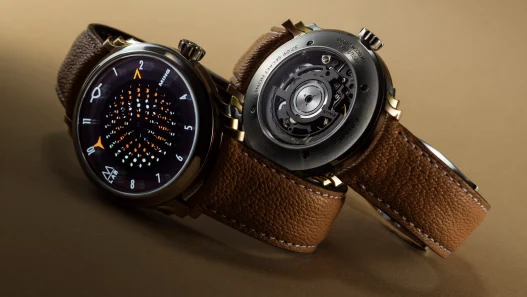
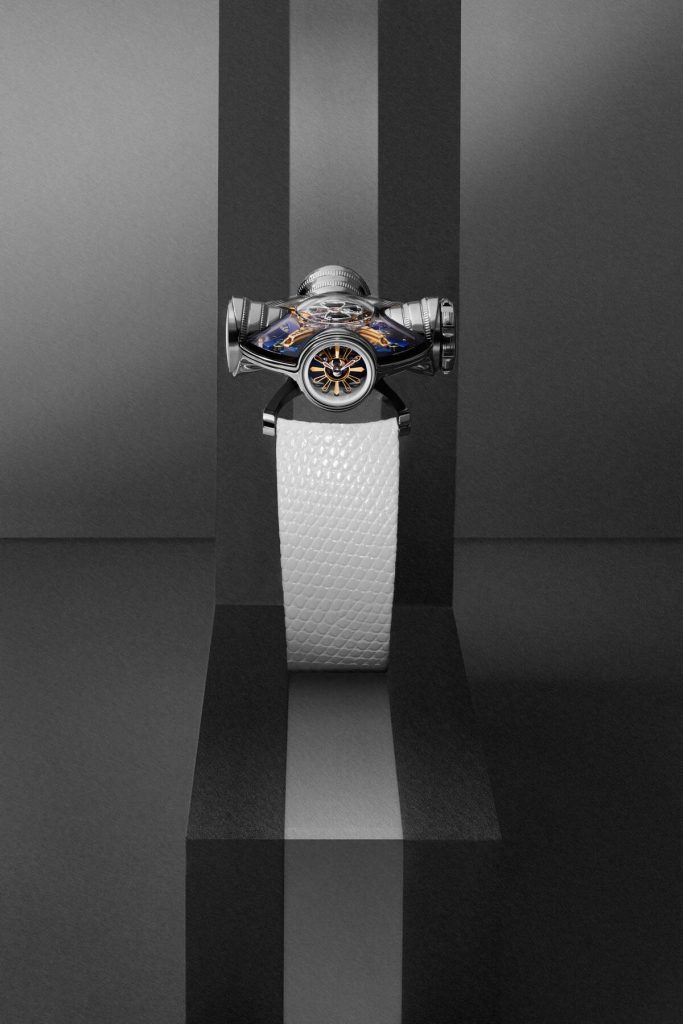
The HM11 is constructed around a central atrium that houses a majestic flying tourbillon, pulsing beneath a double-domed sapphire roof like a kinetic chandelier. Radiating from this core are four symmetrical, parabolic “rooms,” each serving a distinct domestic purpose. In the time room, hours and minutes are displayed; in another, a power reserve indicator tracks the four-day (96-hour) autonomy.
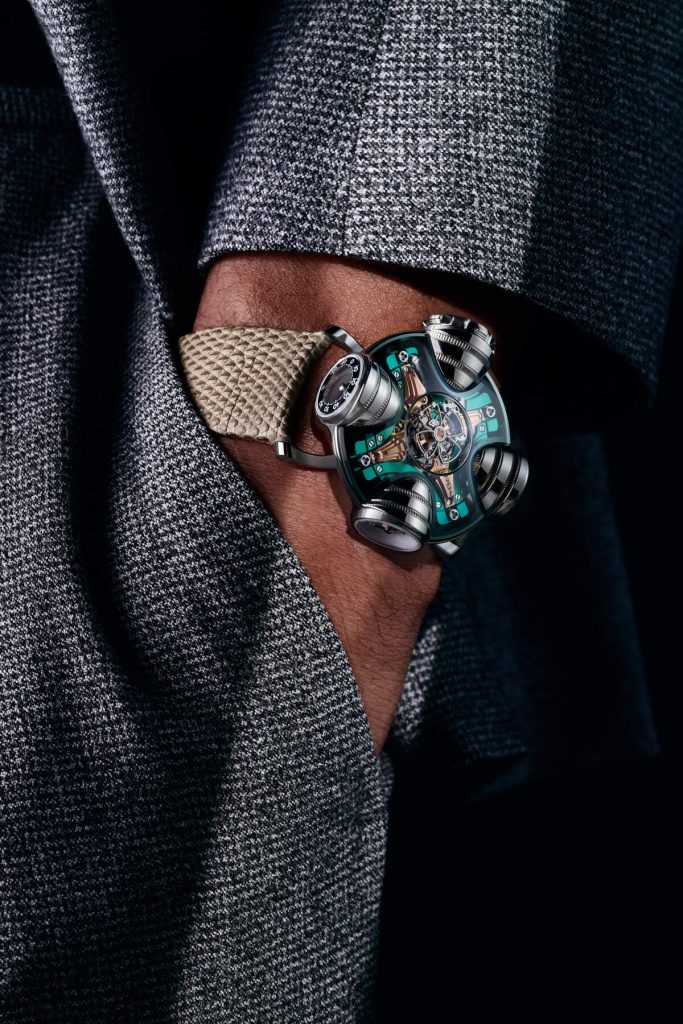
A third room houses a rare mechanical thermometer, utilizing a bimetallic strip to measure the ambient environment—a charmingly analog nod to home climate control. The final room contains the “front door”: a transparent, 10mm sapphire crystal crown that provides an unprecedented, unimpeded view directly into the 364-component engine. This crown alone was an engineering odyssey, requiring a complex system of eight gaskets to ensure the house remains watertight and dust-proof.
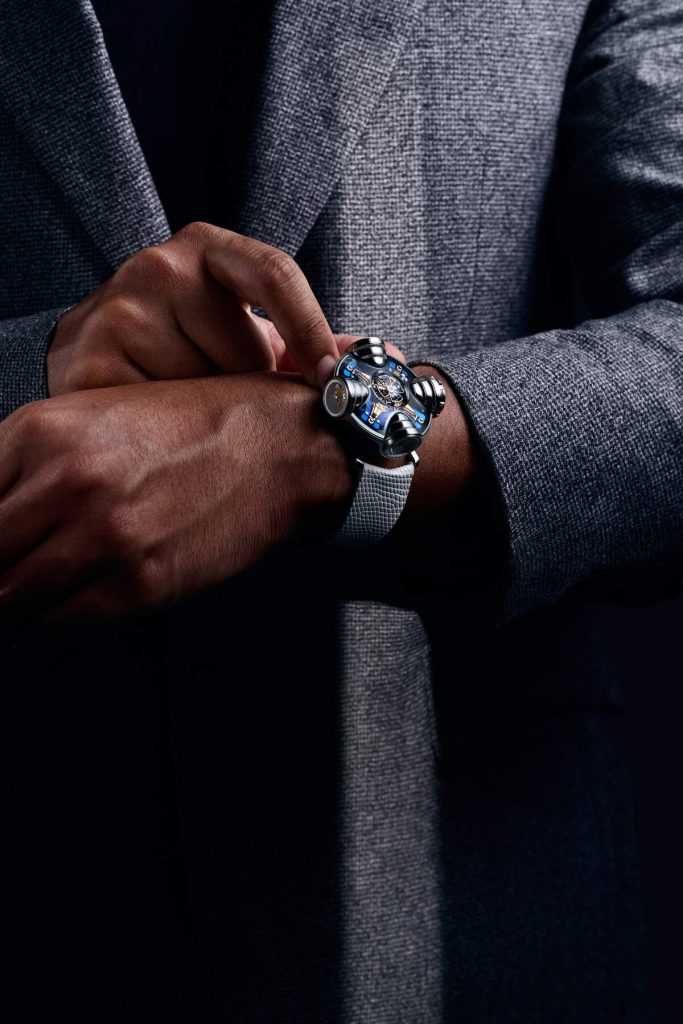
The genius of the HM11 lies in its interactivity. The entire grade 5 titanium case rotates on its foundations, allowing the wearer to physically turn the house to face whichever “room” they require. This isn’t merely for show; each 45-degree clockwise click of the case serves as the winding mechanism, adding 72 minutes of energy to the barrel. It is a tactile ritual that replaces the fiddly winding of a tiny crown with the satisfying rotation of an entire building.
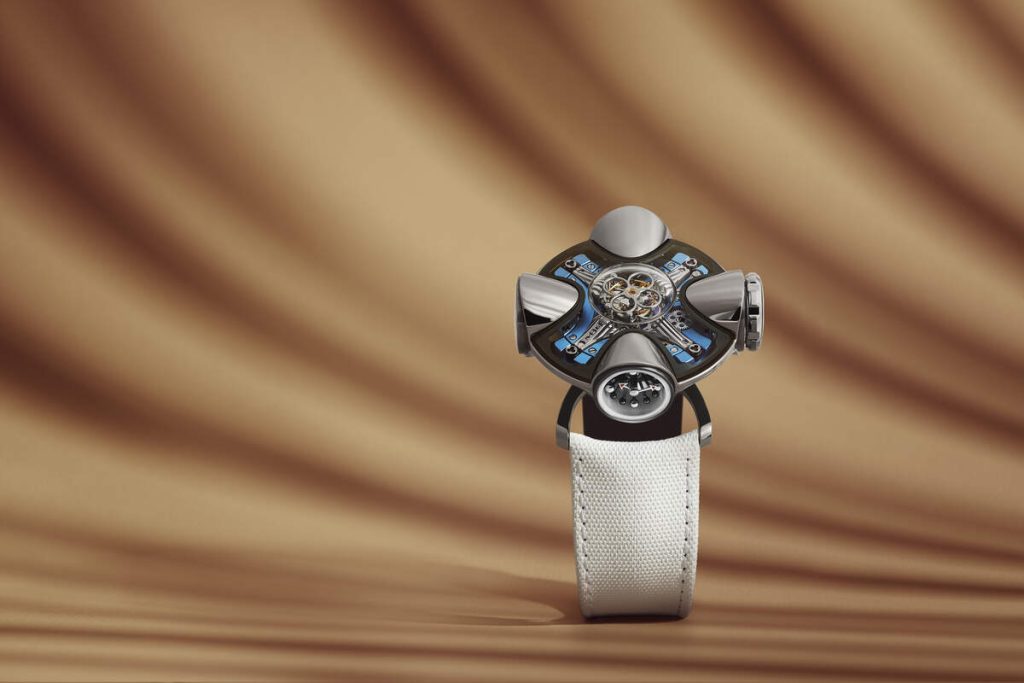
While the original “Architect” edition drew from the organic, bubble-house curves of the 1960s and ’70s, the new HM11 Art Deco series shifts the aesthetic lens toward the 1930s. Guided by designer Maximilian Maertens, the Art Deco editions trade the experimental concrete-like fluidity for the geometric rigor of the Manhattan skyline.
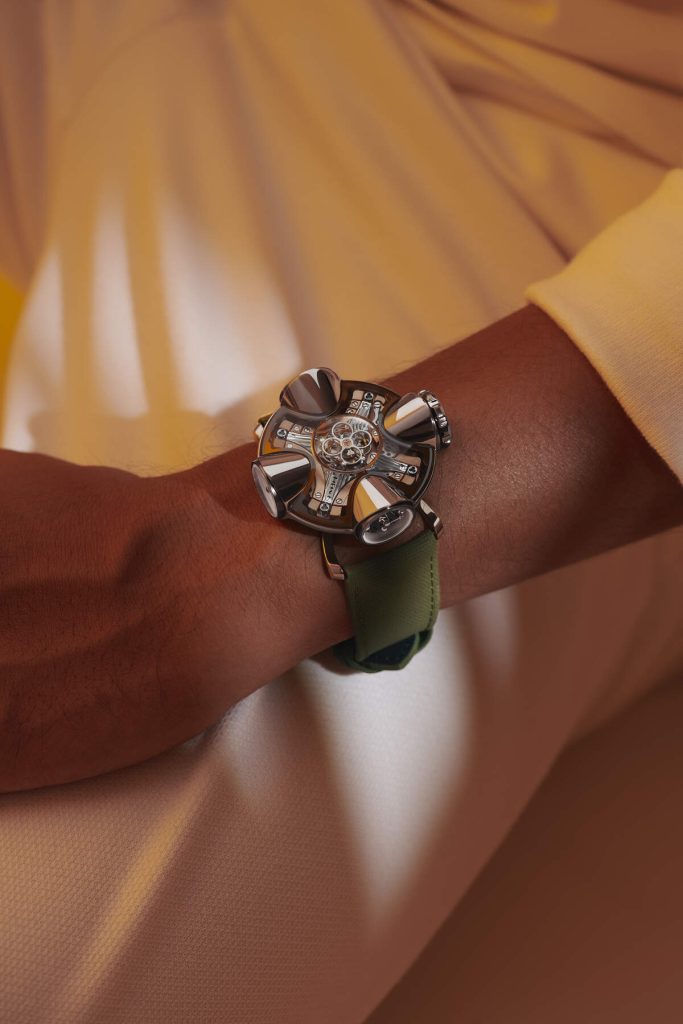
In this newer iteration, the conical orbs of the Architect are replaced by radiating “sunbeam” motifs and stepped ziggurat silhouettes. The bridges are rendered in vibrant PVD shades of blue or green, accented by yellow or rose gold tones that recall the opulent interiors of Parisian cinemas.
Whether in its organic or geometric form, the MB&F Horological Machine N°11 remains a marvel of “soignée” finishing and avant-garde thought. It is a testament to the fact that while a watch and a house may be different machines, the greatest examples of both are those that allow us to inhabit a dream.